


How Strength & Conditioning Improves Performance in Cricket, Tennis, Football & Golf

When children start playing sports seriously, most parents focus on one thing: coaching.
More nets. More drills. More practice hours.
While coaching is essential for skill development, there’s a critical piece many parents overlook—Strength & Conditioning (S&C).
At JuniorFit, we often explain it this way:
Coaching teaches a child how to play the sport. Strength & Conditioning prepares the child’s body to perform the sport - safely, consistently, and at a higher level.
Whether your child plays cricket, tennis, football, or golf, sport-specific fitness can significantly improve performance while reducing injury risk. Let’s break down how and why.
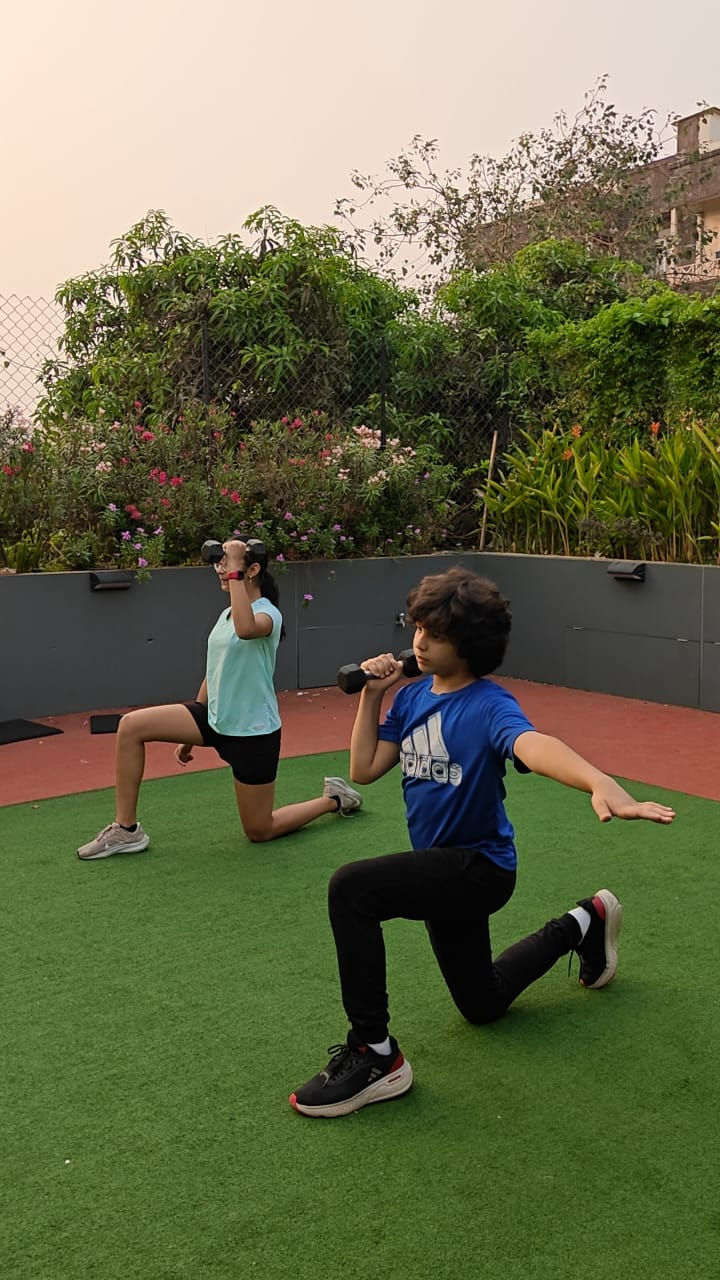
What is Strength & Conditioning for young athletes?
Strength & Conditioning for children is not adult gym training.
It is:
Age-appropriate
Technique-focused
Movement-based
Progressive and safe
A good S&C program improves:
Strength
Power
Speed
Balance
Mobility
Coordination
Most importantly, it helps young athletes move better before they move faster or harder.
Why skill alone is not enough
Children often develop sport skills faster than their bodies can handle.
This mismatch leads to:
Fatigue
Poor technique under pressure
Reduced performance consistency
Increased injury risk
S&C bridges this gap by building a physical foundation that supports coaching.
Cricket: Power, Endurance & Injury Prevention
Key physical demands in cricket:
Repetitive throwing and bowling
Rotational power for batting
Long hours on the field
Sudden sprints and stops
How S&C improves cricket performance:
1. Faster Bowling & Stronger ThrowsStrengthening the core, shoulders, and hips improves force transfer, helping bowlers generate speed without overloading the arm.
2. Better Batting PowerRotational strength training increases bat speed while maintaining balance and control.
3. Reduced Overuse InjuriesTargeted conditioning protects common problem areas like shoulders, lower back, knees, and ankles.
4. Improved Match EnduranceConditioning helps players maintain form deep into long matches instead of fading due to fatigue.

Tennis: Speed, Stability & Repeated Explosiveness
Key physical demands in tennis:
Quick lateral movement
Explosive serves and groundstrokes
Repetitive overhead actions
High unilateral loading
How S&C improves tennis performance:
1. Faster Court Movement
Agility and footwork training improves reaction time and directional changes.
2. Stronger, More Consistent Shots
Core and lower-body strength improve stability during strokes, increasing shot accuracy and power.
3. Shoulder Health
Specific rotator cuff and scapular strengthening reduces the risk of tennis elbow and shoulder injuries.
4. Match Consistency
Conditioned athletes recover faster between points and sets, maintaining intensity throughout matches.
Football: Speed, Agility & Collision Readiness
Key physical demands in football:
Sprinting and acceleration
Sudden deceleration and direction changes
Physical contact
Repeated high-intensity efforts
How S&C improves football performance:
1. Faster Acceleration & Sprint Speed
Lower-body strength and power training improves take-off and top speed.
2. Better Balance & Stability
Core and single-leg training enhances control during tackles and quick turns.
3. Reduced Injury Risk
Proper conditioning protects knees, ankles, and hamstrings—common injury sites in football.
4. Game-Endurance
Conditioned players sustain high effort levels throughout the match instead of tiring early.
Golf: Power, Precision & Longevity
Golf is often underestimated physically—but it is one of the most demanding rotational sports.
Key physical demands in golf:
High-speed rotational force
Balance and postural control
Repetitive asymmetric movement
Long practice sessions
How S&C improves golf performance:
1. Increased Club head Speed
Strength and power training improve force generation from the ground up.
2. Improved Swing Efficiency
Mobility in hips and thoracic spine allows a fuller, smoother swing.
3. Better Balance & Consistency
Core stability helps maintain posture and control through the swing.
4. Reduced Back & Shoulder Injuries
Conditioning supports the spine and shoulders, reducing stress from repetitive swings.
Common benefits across all sports
Regardless of sport, structured Strength & Conditioning helps young athletes:
Move more efficiently
Generate power safely
Recover faster
Reduce fatigue-related errors
Build confidence in their bodies
It also teaches children how to train, an essential life skill as they progress in sports.

What Strength & Conditioning is NOT
It is not:
Heavy weightlifting
Bodybuilding
Pushing children beyond limits
Replacing sports coaching
Good S&C supports coaching, not competes with it.
When should children start Strength & Conditioning?
Children can begin structured S&C as soon as they can follow instructions and demonstrate basic movement control.
Early programs focus on:
Bodyweight movements
Balance and coordination
Mobility and posture
Fundamental strength
As children grow, training evolves with them.
How JuniorFit’s SportFit program approaches S&C
At JuniorFit, SportFit is built on Long-Term Athletic Development (LTAD) principles.
Our approach includes:
Age-appropriate progressions
Sport-specific movement patterns
Injury prevention and load management
Close coordination with sports coaches
Focus on quality over quantity
We don’t chase short-term results.We build athletes for the long run.
A message to Parents
If your child is training hard but:
Tires easily
Complains of aches or pains
Plateaus in performance
Struggles with consistency
The answer may not be more practice. Often, it’s better preparation.
Strength & Conditioning helps young athletes perform better today, while protecting their bodies for tomorrow.
Thinking about sport-specific fitness for your child?
If your child plays cricket, tennis, football, or golf and you’d like to understand how Strength & Conditioning can support their performance, we’re happy to guide you.
JuniorFit offers SportFit assessments and consultations to help parents make informed decisions—without pressure.


Comments